


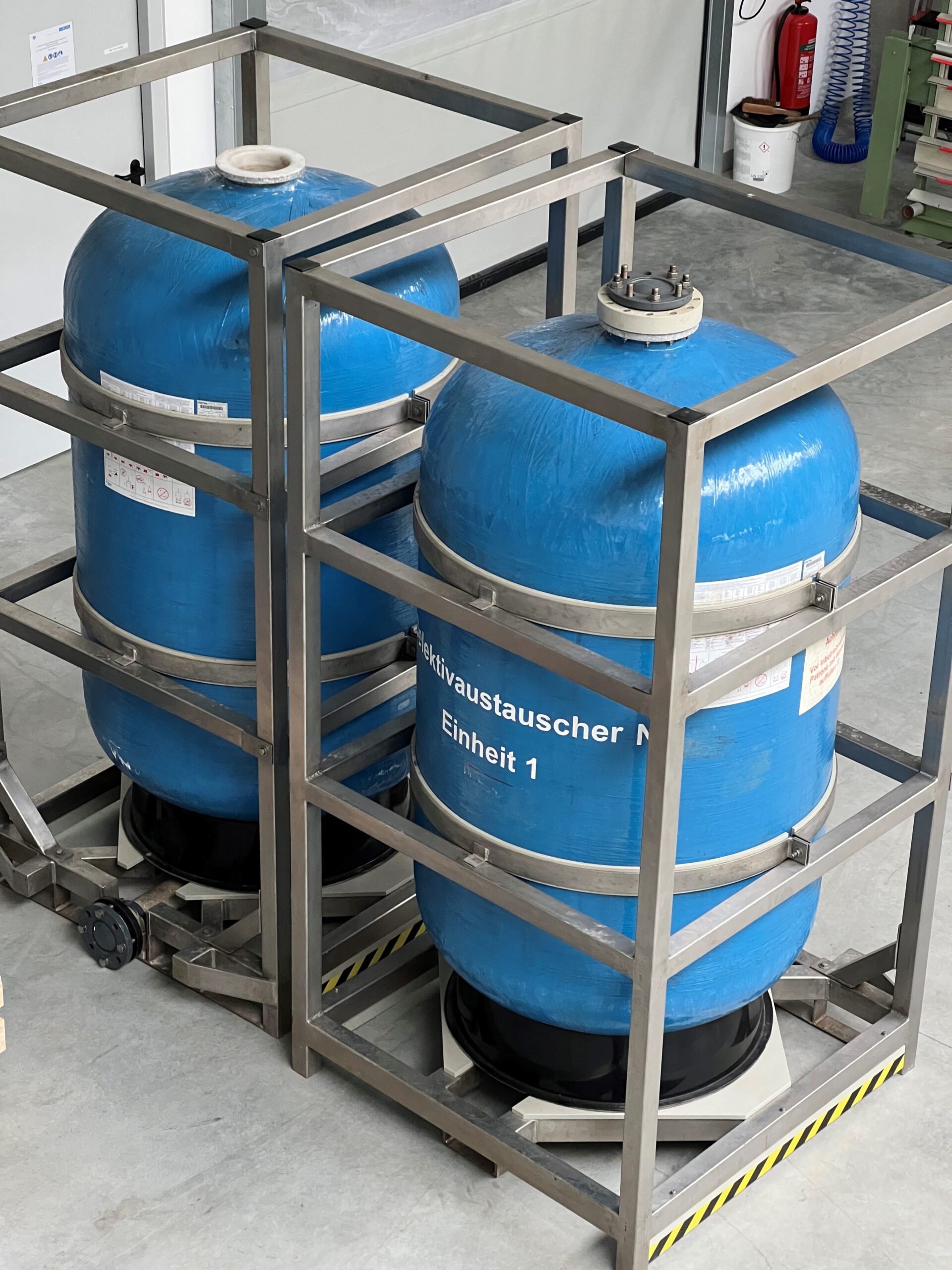
Arsenic groundwater removal (for arsenic removal in drinking water)
Introduction Arsenic in water
Arsenic is a basically naturally occurring element that is found in groundwater in many parts of the world. It is used in metal smelting, the glass, semiconductor and chemical industries and in semiconductor electronics as gallium arsenide, indium arsenide phosphide or gallium arsenide phosphide. During the smelting of gold, silver, tin, copper, cobalt and other non-ferrous metal ores, arsenic often appears as a by-product or even as an alloying component in copper and lead. However, it is also found in the processing of phosphate raw materials and can be eluted from various wastes, e.g. from gravel washing during production. Arsenic can lead to serious health problems, such as skin changes, cancer, diabetes and cardiovascular diseases. The World Health Organization (WHO) recommends a limit value of 10 µg/L arsenic in drinking water, the Drinking Water Ordinance 2023 provides for a reduced limit value of 4 µg/L arsenic (from 2036 or from 2028 for new systems). In order to protect the population from arsenic contamination, various methods are required to remove arsenic from groundwater.
Methods for removing arsenic from groundwater
There are various methods for the removal of arsenic in groundwater (e.g. for the removal of arsenic in drinking water), which can be selected depending on the local conditions, the available budget and the required efficiency. The most common methods in chemical-physical wastewater treatment include
- Oxidation and coagulation and flocculation: This method is based on the conversion of arsenic(III) into arsenic(V), which is easier to remove. The oxidizing agent is usually hydrogen peroxide, but may also be air injection. With the addition of coagulants (e.g. usually iron III), which react with arsenic and form flocs that can then be filtered off or settled. A complete chemical-physical wastewater treatment plant is required for this treatment. However, low residual solubilities of less than 0.1 mg/L can be realized. Alternatively, sulphide precipitation could also take place in the acidic range, but this is not very common due to the release of hydrogen sulphide.
- Membrane filtration: This method is based on the use of membranes (e.g. reverse osmosis), which retain arsenic and other dissolved substances from the water, but produce a continuous stream of concentrate. The ingredients are further concentrated in this. The method is therefore not widely used and, if it is, arsenic removal is only a side effect of the actual purpose of the system.
What both methods have in common is that they regularly require a high level of equipment and are therefore not intended for use in the field. The alternatives to arsenic removal are adsorption processes or special ion exchangers that are loaded on site and then disposed of or regenerated externally. Ideally, the arsenic is present at this point (at least) as arsenic(V) through air injection.
- Adsorption: This method is based on the adsorption of arsenic on the surface of adsorbents (usually iron oxide/hydroxide), which can then be removed from the water. These processes are common, but their breakthrough behavior is difficult to predict and although arsenic is regularly removed well, other heavy metals are released in small quantities (e.g. copper, nickel) due to the manufacturing process. Further cleaning using a selective exchanger may therefore be necessary.
- Ion exchange: This method is based on the exchange of arsenic ions with other ions on the surface of ion exchange resins, which then have to be treated or exchanged externally as an ion exchanger regeneration service, so-called ion exchanger exchange. Depending on the water composition, either an anion exchanger or a specially doped selective exchanger is required. Both have a lower capacity than the iron oxide/hydroxide granules, but do not elute any other substances.
Depending on the composition and technical possibilities on site, an optimal system is designed for the intended use.
Do you have further questions about removing arsenic from groundwater? Please do not hesitate to contact us.